WELCOME TO
Patient Resources

Meniscus Tear Treatment: Why Surgery Isn't Always the Answer
Meniscus Tear Treatment: Why Surgery Isn’t Always the Answer
Meniscus Tear In The Older Knee: Surgery vs. No Surgery Explained
The Shift Away from Knee Arthroscopy for Meniscus Tears
In the past, doctors often recommended surgery, known as a “knee clean-out,” when scans showed a meniscus tear. The thinking was simple: if there’s a tear, it must be causing knee pain, so let’s remove it!
However, modern medicine has evolved, and we now know that meniscus tears are often a normal part of aging knees, especially for older adults with knee arthritis.
Thankfully, the approach to knee pain and imaging has improved. While some meniscus tears require attention, there are important factors to consider, especially for older adults seeking treatment.
New Guidelines for Knee Arthritis and Arthroscopy
In August 2024, the Australian Commission on Safety and Quality in Health Care updated its Clinical Care Standard for Osteoarthritis of the Knee. This document guides our approach to knee arthritis treatment at Gold Coast Knee Group. Here’s what it says about knee arthroscopy:
Arthroscopic procedures, like debridement or partial meniscectomy, offer little to no benefit for pain or function in most cases of uncomplicated knee osteoarthritis.
Meniscus tears are common in knees with osteoarthritis, even if you don’t have symptoms.
Surgery may be needed only for specific conditions, like mechanical locking, septic arthritis, or inflammatory issues requiring synovectomy.
These guidelines reflect a shift away from knee arthroscopy for degenerative meniscus tears, supported by strong research.
The Decline of Knee Arthroscopy in Australia
Knee arthroscopy peaked in Australia in 2013, but a landmark study in the New England Journal of Medicine changed everything. The study, titled “Arthroscopic Partial Meniscectomy versus Sham Surgery for a Degenerative Meniscal Tear,” compared surgery to a placebo procedure in 146 patients and found no difference in outcomes.
This evidence led to a 47% drop in knee arthroscopies for people over 45 between 2015 and 2022, even as other surgeries, like total knee replacements, increased.
Further research, including a 2017 BMJ Open review, concluded: “We make a strong recommendation against the use of arthroscopy in nearly all patients with degenerative knee disease.”
This clear evidence has transformed how we approach knee pain treatment, prioritising non-surgical knee treatment options.
Should You Get Imaging for Knee Pain?
Many patients ask for scans, like MRIs or X-rays, to diagnose knee pain. While imaging can provide clarity, it’s not always necessary and may lead to unnecessary procedures. The 2024 Clinical Care Standard advises:
Routine imaging isn’t needed if a doctor performs a thorough clinical assessment.
Meniscus tears are common in arthritic knees, with or without symptoms.
Detecting a tear on a scan doesn’t always mean surgery is required.
Pain levels don’t always match what scans show—some people have severe pain with minor changes, while others have minimal pain with significant changes.
X-rays are preferred over MRIs as the first imaging option when needed.
Imaging is useful only for atypical symptoms or suspected alternative diagnoses.
At Gold Coast Knee Group, we interpret imaging results alongside your symptoms and physical function to create a personalised knee pain treatment plan.
Non-Surgical Knee Treatment: The Power of Rehabilitation
Instead of surgery, rehabilitation is the top recommendation for managing knee arthritis and meniscus tears.
Our Healthy Knee Program at Gold Coast Knee Group is specifically designed for people older people with knee pain and emphasises the Critical 3: Activity, Inflammation and Knowledge [hyperlink to articles]. Research shows that knee rehabilitation is cost-effective and delivers results comparable to surgery.
Surprisingly, nearly 70% of people waiting for knee replacement surgery haven’t tried non-surgical treatments beyond medication. Rehabilitation not only helps your knee but also boosts your overall health, reducing risks of other conditions.
Explore our services for personalised non-surgical knee treatment
Wrapping Up
Here’s the key takeaway for managing meniscus injuries and pain:
Knee arthroscopy for meniscus tears and knee arthritis has declined due to evidence showing limited benefits.
Updated 2024 guidelines recommend against routine surgery or imaging for uncomplicated knee osteoarthritis.
Focus on non-surgical knee treatment, like exercise and lifestyle changes, for better knee health and overall well-being.
For personalised advice, contact us at Gold Coast Knee Group. We’re here to help you find the best knee pain treatment.
Yours in knee health,
Dr. Adam Walker
FAQs About Knee Pain and Treatment
What causes knee pain in older adults?
Knee pain in older adults is often caused by osteoarthritis or meniscus tears, which are normal as knees age. These don’t always need surgery and can be managed with exercise and rehabilitation.
Do I need surgery for a meniscus tear?
Most meniscus tears in older adults don’t require surgery. Non-surgical treatments, like our Healthy Knee Program, can help reduce pain and improve movement.
Should I get an MRI for knee pain?
An MRI isn’t always necessary. A doctor’s assessment and sometimes an X-ray are enough to diagnose knee arthritis or meniscus tears. Imaging is only needed for unusual symptoms.
What is the best treatment for knee arthritis?
Rehabilitation, including exercises, healthy eating, and good sleep, is the best treatment for knee arthritis. It’s effective, cost-efficient, and improves overall health.
How can I join the Healthy Knee Program?
Visit gckneegroup.com.au/older-knee to learn about our Healthy Knee Program and sign up for our discounted launch offer.
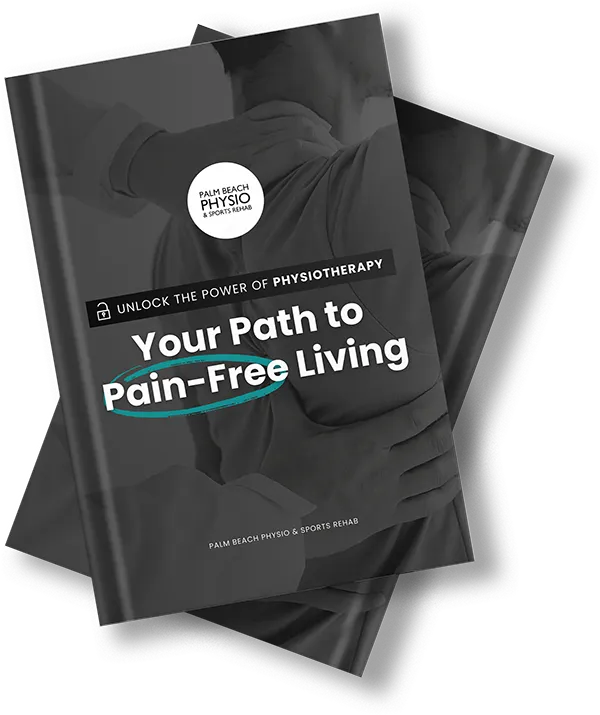
Unlock the Power of Physiotherapy
Your Path to Pain-Free Living
Discover the transformative benefits of physiotherapy and regain control over your body. Our exclusive guide, "The Ultimate Guide to Physiotherapy: Your Roadmap to Optimal Health," provides valuable insights into the fundamentals, techniques, and success stories of physiotherapy. Sign up now to embark on a journey towards a pain-free, active lifestyle.
Palm Beach Physio and Sports Rehab
What OurPatients Say

I was plagued by chronic back pain for years, making it difficult to enjoy even the simplest activities. Thanks to the incredible physiotherapy services, I finally found relief. Their skilled physiotherapist not only helped alleviate my pain but also taught me exercises and techniques to strengthen my core and improve my posture.
Sarah M.


After undergoing knee surgery, I was unsure if I would ever regain full mobility. That's when I discovered the transformative power of physiotherapy. The dedicated team of physiotherapists designed a personalized rehabilitation program that included a combination of exercises, manual therapy, and advanced techniques.
John W.

As an athlete, I constantly push my body to the limits. Unfortunately, this often leads to injuries and setbacks. However, with the help of the outstanding physiotherapy services, I've been able to bounce back stronger than ever. Their sports-focused approach, including targeted exercises, injury prevention strategies, and performance...
Emily R.

Location
9/1 Fielding Street, Currumbin
Conveniently located in the heart of Currumbin, next to Currumbin Medical Centre and just over the Thrower Drive bridge