WELCOME TO
Patient Resources

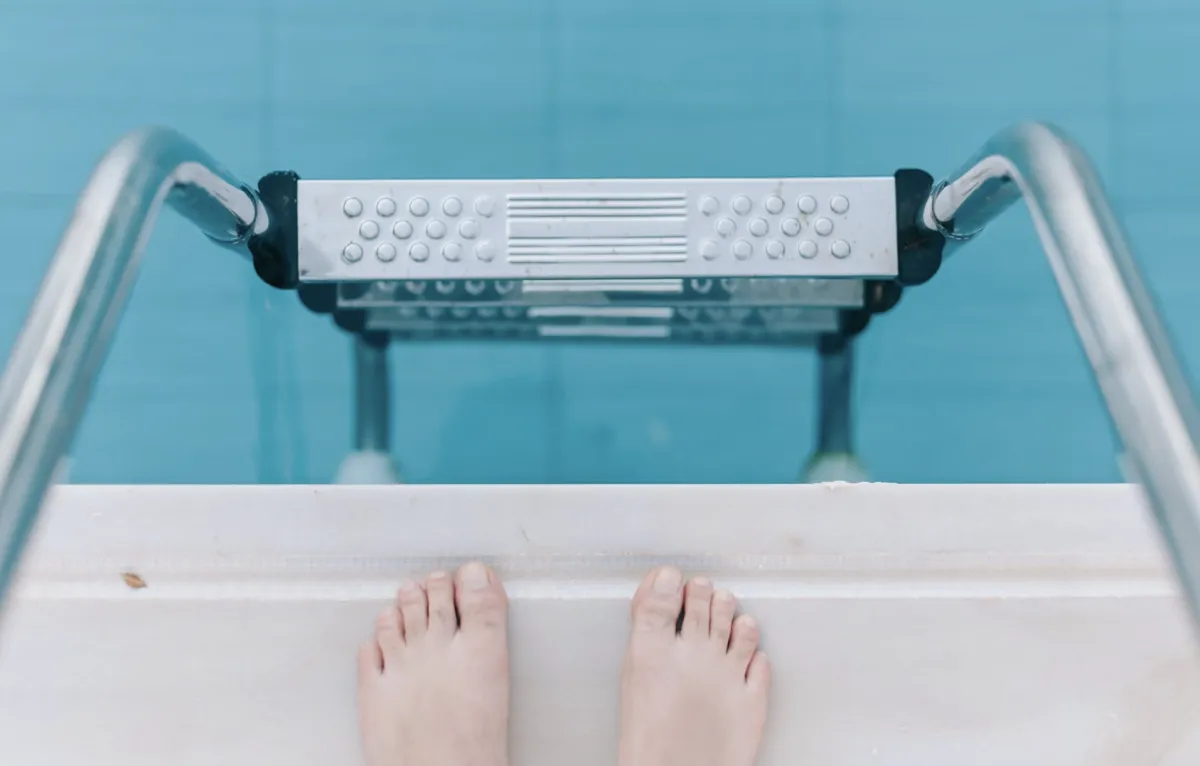
Hydrotherapy After Surgery: 4 Reasons Why the Pool Might Be Your Best First Step Back
Hydrotherapy After Surgery: 4 Reasons Why the Pool Might Be Your Best First Step Back
There’s a moment after surgery that almost everyone remembers.
You’re told it went well. You’re cleared to start rehab.
But your knee (or shoulder, or ankle) doesn’t quite agree.
It’s stiff. Swollen. Heavy. Even simple movements feel awkward, like your body has forgotten how to move properly.
And somewhere in the back of your mind, there’s that quiet hesitation:
“Am I going to make this worse?”
That’s often where hydrotherapy quietly changes things.
Hydrotherapy isn’t just about making rehab easier, it actually changes what your body is capable of early on.
1. It reduces load without stopping progress
When you’re in the water, your body weight is partially supported. At chest depth, you might only be loading 30–40% of your body weight.
For a post-surgical joint, that’s huge.
It means you can start:
Walking sooner
Bending the joint more comfortably
Reintroducing functional movements earlier
…without the same compressive stress you’d feel on land.
2. It actively helps swelling and pain
Hydrostatic pressure, the gentle compression from the water, helps move fluid out of the joint and back into circulation.
Patients often notice:
Less “tightness” around the joint
Improved range of motion within a single session
A general sense that movement feels less threatening
And that last one matters more than we sometimes acknowledge. Because when movement feels safer, people move more.
3. It allows earlier, better movement retraining
After surgery, your body adapts quickly, often in ways we don’t want.
You might:
Limp
Shift weight away from the surgical side
Avoid bending or loading properly
Water gives you a chance to reset that. Because the load is reduced, you can practise normal walking and movement patterns earlier without compensating as much.
It’s not just about moving… it’s about moving well, from the start.
4. It builds strength in a different way
Water provides resistance in every direction. It’s not aggressive or jerkym, it’s smooth, constant, and adapts to how hard you push.
That means you can start rebuilding:
Quadriceps strength
Hip stability
Balance and control
…without overloading healing tissue.
And importantly, without that post-session flare-up that sometimes happens with early land-based work.
A good example of where hydrotherapy really fits is after a knee replacement.
This is a stage where people are often caught between two realities:
They need to move to regain range and strength
But movement is still painful, stiff, and fatiguing
That tension can slow progress — or lead to frustration early on.
This is where the pool becomes incredibly valuable.
Early stage (first few weeks post-op)
The focus is simple — reduce swelling, restore movement, and get walking again.
In the pool, you can:
Practise walking with a more natural gait (without full body weight)
Gently work on knee bending and straightening
Rebuild confidence with movement
Often, people who feel “stuck” on land suddenly realise they can move more freely.
Mid stage (building strength and control)
As pain settles, the next step is rebuilding strength and coordination.
This might include:
Sit-to-stand patterns in water
Step work and balance drills
Controlled strengthening against water resistance
Because the environment is more forgiving, you can do more, without irritating the joint.
Late stage (transition back to land)
Eventually, the goal is always to return to full land-based function.
But by this point:
Range of motion is better
Strength has improved
Movement patterns are more natural
So the transition feels smoother, not like starting over again.
Research supports this progression too. Hydrotherapy has been shown to reduce pain, improve joint movement, and enhance muscle activation, often with greater effect than land-based exercise alone in early stages.
But beyond the data, there’s something that shows up again and again in real rehab:
People move differently when they feel safe. And water helps create that.
Post-surgical rehab isn’t just about doing the right exercises. It’s about doing them at the right time, in the right environment.
Hydrotherapy gives you a way to start earlier, without forcing things. To rebuild movement without constantly pushing through pain. mAnd to regain confidence in your body, one session at a time.
Because once that confidence comes back… progress tends to follow.
Unlock the Power of Physiotherapy
Your Path to Pain-Free Living
Discover the transformative benefits of physiotherapy and regain control over your body. Our exclusive guide, "The Ultimate Guide to Physiotherapy: Your Roadmap to Optimal Health," provides valuable insights into the fundamentals, techniques, and success stories of physiotherapy. Sign up now to embark on a journey towards a pain-free, active lifestyle.
Palm Beach Physio and Sports Rehab
What OurPatients Say

I was plagued by chronic back pain for years, making it difficult to enjoy even the simplest activities. Thanks to the incredible physiotherapy services, I finally found relief. Their skilled physiotherapist not only helped alleviate my pain but also taught me exercises and techniques to strengthen my core and improve my posture.
Sarah M.


After undergoing knee surgery, I was unsure if I would ever regain full mobility. That's when I discovered the transformative power of physiotherapy. The dedicated team of physiotherapists designed a personalized rehabilitation program that included a combination of exercises, manual therapy, and advanced techniques.
John W.

As an athlete, I constantly push my body to the limits. Unfortunately, this often leads to injuries and setbacks. However, with the help of the outstanding physiotherapy services, I've been able to bounce back stronger than ever. Their sports-focused approach, including targeted exercises, injury prevention strategies, and performance...
Emily R.

Location
9/1 Fielding Street, Currumbin
Conveniently located in the heart of Currumbin, next to Currumbin Medical Centre and just over the Thrower Drive bridge